

Padel Net and Mesh Systems Quality Guide
Are you evaluating a padel court? Investors and club owners often focus on the artificial turf or panoramic glass walls. However, high-grade padel net and mesh systems are the most critical structural components. Specifically, they dictate the ball’s rebound predictability, ensure player safety, and determine long-term court durability in harsh outdoor conditions.
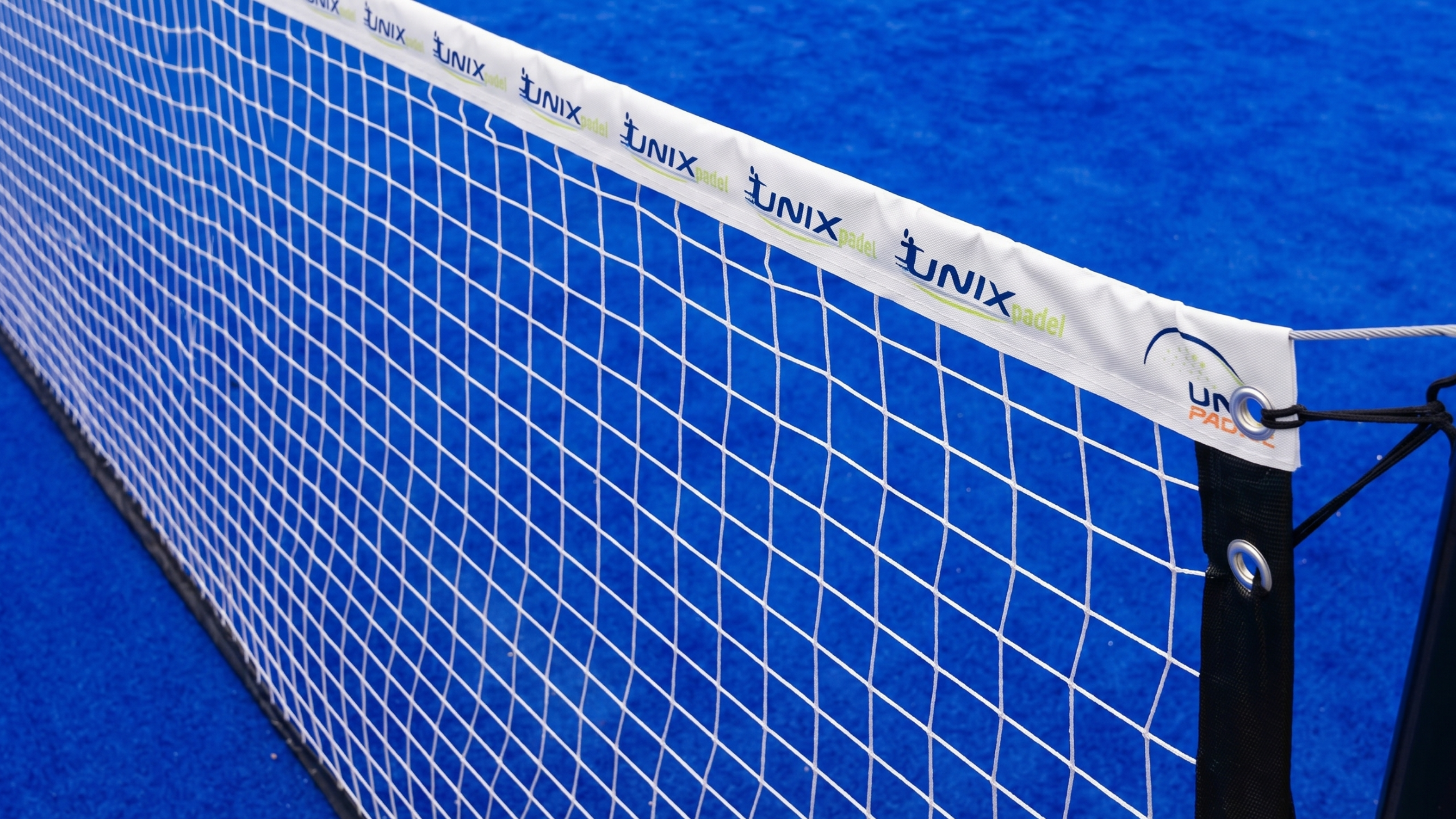
Key Technical Specifications
A regulation net measures exactly 10 meters in length. According to official regulations published by the International Padel Federation (FIP), it must be 0.88 meters high at the center and rise to 0.92 meters at the posts. Beyond these basic dimensions, manufacturing quality defines structural lifespan.
- ✓
Material Composition & Density: Premium nets use high-density Polypropylene (PP) or Polyethylene (PE). Manufacturers must UV-stabilize these synthetic fibers. Consequently, this prevents fading and brittleness under direct sunlight. - ✓
Thread Thickness & Knotless Design: Standard thread thickness ranges between 3.0 mm and 4.0 mm. Therefore, we highly recommend a knotless design. Knotless nets absorb and distribute energy more effectively, preventing isolated thread failure. - ✓
Headband & Tension Cable: The upper band uses heavy-duty, double-stitched polyester or PVC for maximum tear resistance. In addition, the internal tension cable consists of plastic-coated galvanized steel to prevent internal rusting and ensure precise tension calibration.
Metallic Fencing and Court Enclosure Standards
Unlike tennis, the metallic mesh in padel is an active element of the playing area. Players frequently rely on it for strategic rebounds and it sustains high-speed body impacts. Because of this, structural integrity is non-negotiable.
- ✓
Electro-Welded Grid Standards: The structural mesh features electro-welded wire with exact grid openings of 50 mm × 50 mm. FIP regulations recommend a wire thickness between 1.6 mm and 3.0 mm, but allow up to 4.0 mm for extra durability. This geometry provides a consistent rebound angle and prevents the ball from passing through. - ✓
Advanced Anti-Corrosion Engineering: Outdoor courts face harsh weather conditions where raw steel rapidly degrades. Premium systems undergo a dual-layer protection process: hot-dip galvanization followed by a high-temperature polyester powder coating to create an impenetrable barrier against rust.
⚠️ Finitions affleurantes pour prévenir les blessures
Safety is paramount on a padel court. Specifically, the interior-facing side of the metallic framework must be completely flush with the structural pillars. Any protruding wire ends, rough welds, or sharp edges present a severe laceration risk and represent substandard manufacturing.
Structural Integration and Installation
A top-tier installation determines court longevity. Installers must securely anchor the mesh panels to the main structural pillars. In addition, high-quality padel net and mesh systems utilize anti-vibration rubber gaskets. This engineering detail minimizes metallic rattle, reduces acoustic pollution, and absorbs kinetic energy to extend weld point lifespan.
Long-Term Value and ROI
Investing in certified court enclosure components drastically reduces total cost of ownership. Although these premium materials require minimal daily maintenance, you should still implement a routine inspection protocol. Verifying cable tension and checking powder coating integrity will maximize the court’s operational lifespan and maintain aesthetic appeal.
Ready to Upgrade Your Padel Court?
Ensure your players get the best experience with our certified, structurally engineered padel net and mesh systems. Contact us today to discuss your project requirements.
