

So bauen Sie einen Padel-Platz
If you are wondering how to build a padel court, you have come to the right place. Indeed, building a padel court is an exciting project that transforms an empty space into a dynamic, revenue-generating sports facility. While engineers must keep the construction process precise, understanding the core steps remains very straightforward. Furthermore, a successful build relies on a solid foundation, a strong structural frame, and high-quality playing surfaces. In this guide on how to build a padel court, we provide a comprehensive overview of the essential phases, helping you make informed decisions for your club or private residence.
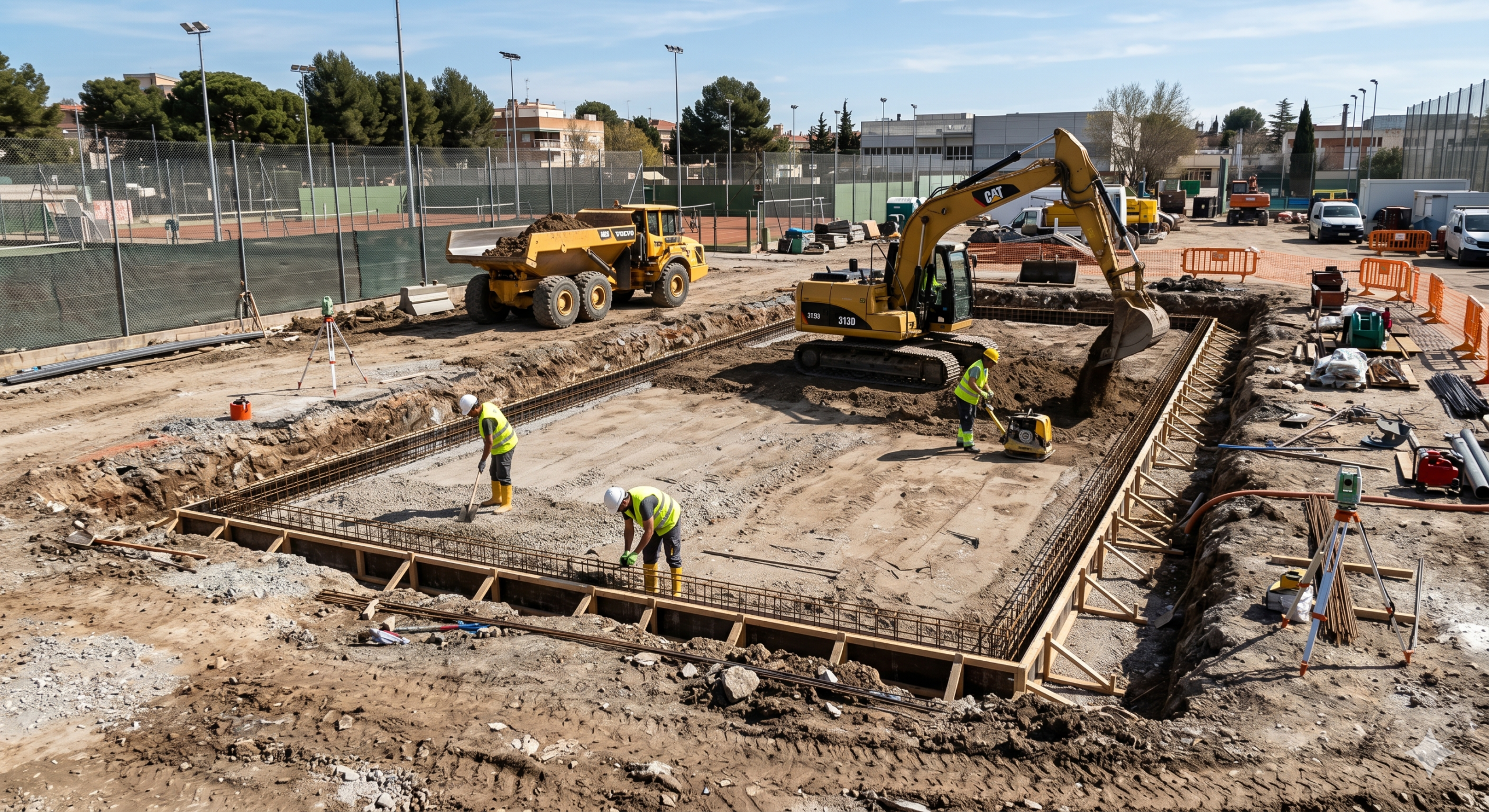
1. Baustellenvorbereitung und Aushubarbeiten
First, construction teams begin the process by clearing the designated land. According to the International Padel Federation (FIP), a standard court requires an internal playing area of 10×20 meters, plus extra safety margins around the perimeter. Consequently, workers excavate and level the ground perfectly using laser-guided equipment to avoid any future structural issues. Finally, contractors pour a solid porous concrete foundation or a reinforced concrete slab to provide maximum stability and ensure proper water drainage, which is a critical step when learning how to build a padel court that lasts.
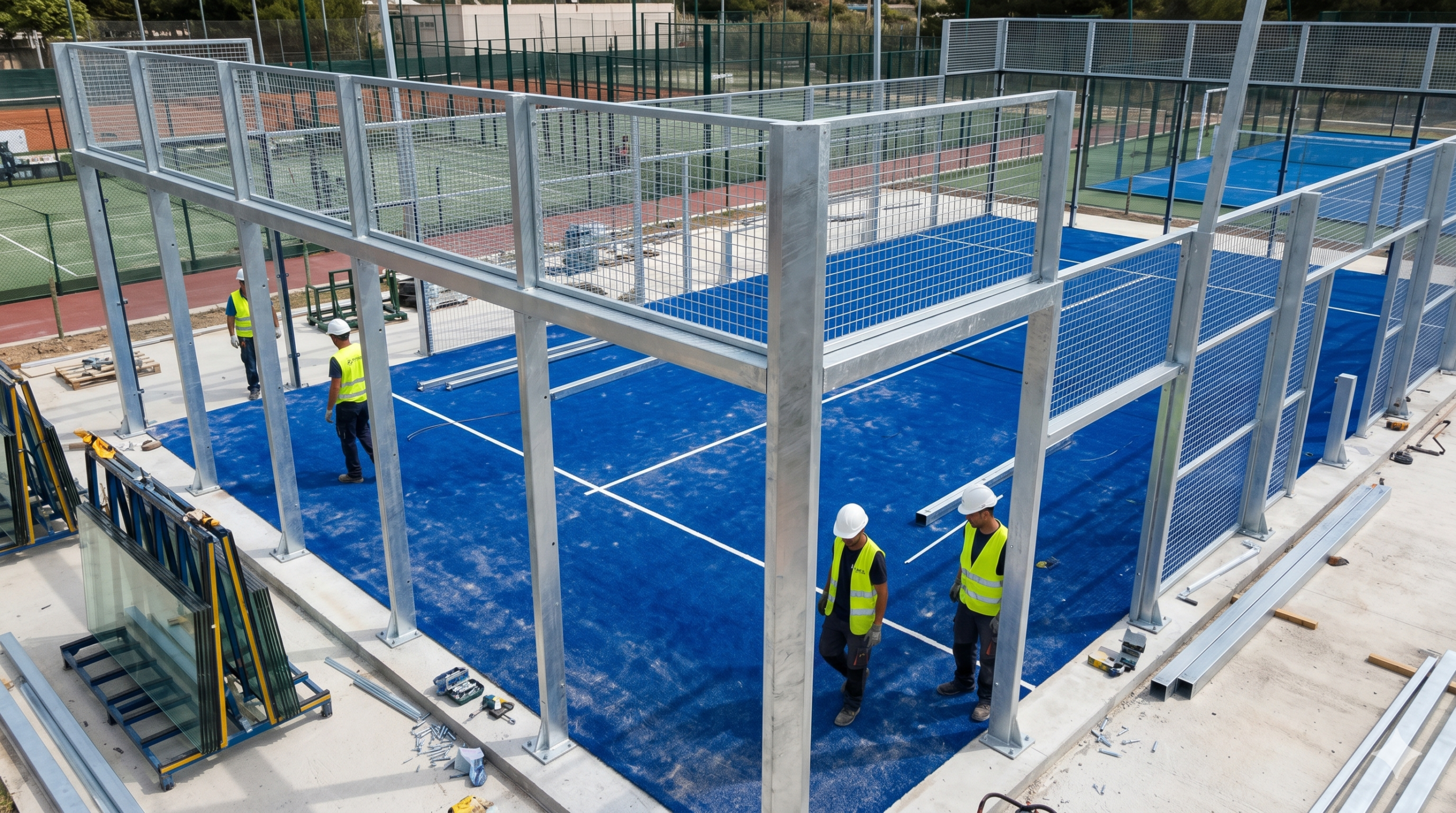
2. Montage der Bauteile
Once the foundation cures fully, installers carefully anchor the heavy-duty metallic framework to the concrete base. Engineers design this robust galvanized steel skeleton to withstand strong winds, varying weather conditions, and heavy player impact. Immediately following frame installation, technicians fit rigid anti-injury wire mesh panels to enclose the sides of the court. As a result, this setup guarantees player safety and produces consistent ball rebounds. For detailed specifications on the steel structures we use, you can review our Unixpadel court models.
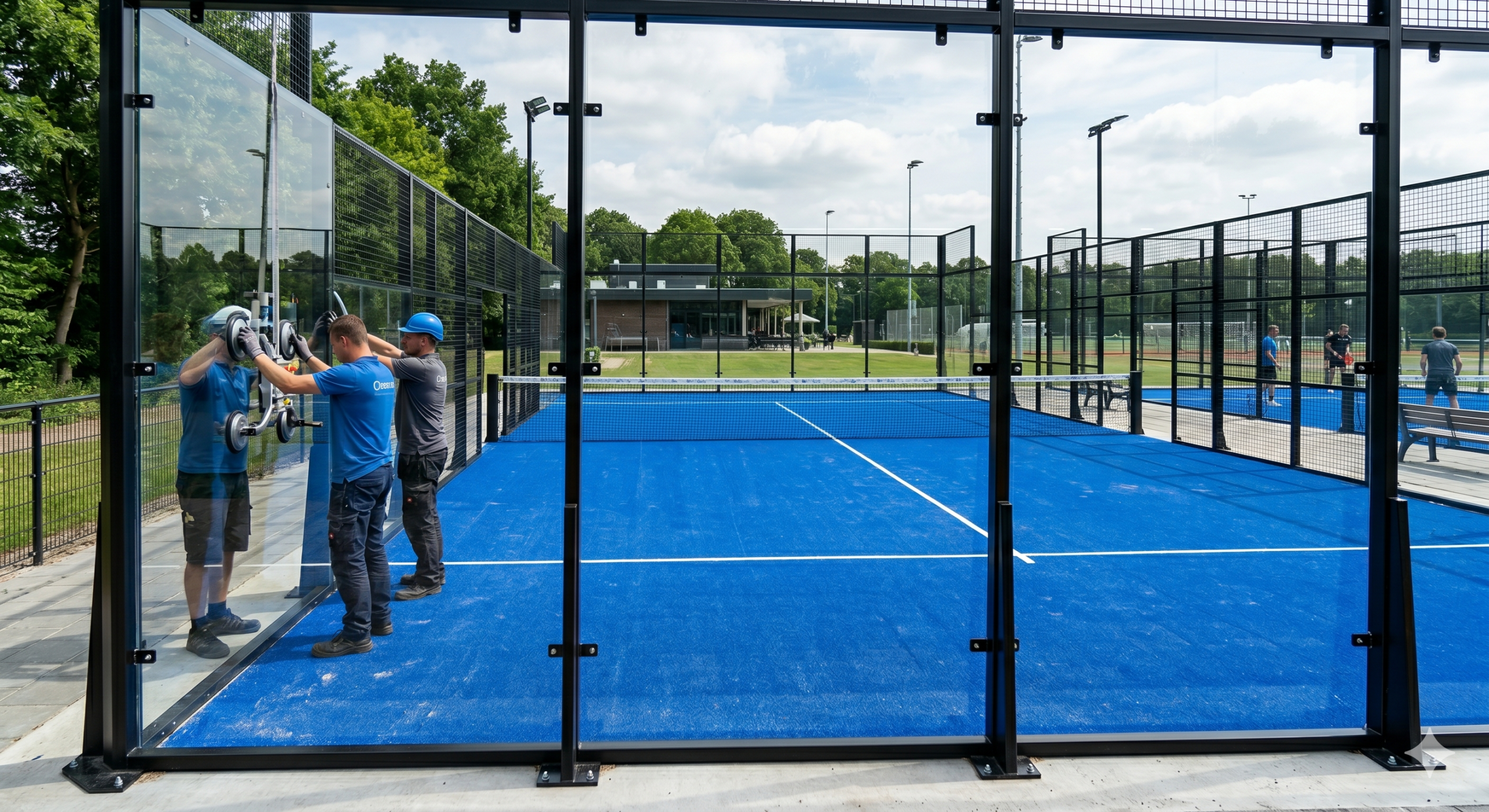
3. Hochwertige Komponenten
In the final phase, workers focus entirely on the premium playing experience and aesthetics. First, installers securely fasten high-impact tempered glass panels (usually 10mm or 12mm thick, depending on wind load requirements) to the steel frame, providing optimal visibility for spectators. Next, builders lay down professional-grade texturized or monofilament artificial turf. Subsequently, technicians meticulously fill this turf with specific, rounded silica sand to guarantee perfect ball bounce, optimal player grip, and joint protection. Completing these precise steps ensures your facility offers an elite sporting experience.