

Coastal Padel Courts: Can They Be Built in Humid Areas?
Padel Court Ceiling Height Guide: FIP Standards & Ideal Height
July 21, 2026Coastal Padel Courts: Can They Be Built in Humid Areas?
Building coastal padel courts near the ocean or in tropical locations introduces severe climate challenges. Saltwater spray, high humidity, and strong sea winds quickly degrade standard metal structures. However, investors can safely install durable coastal padel courts when they apply specialized engineering and rust-resistant materials.
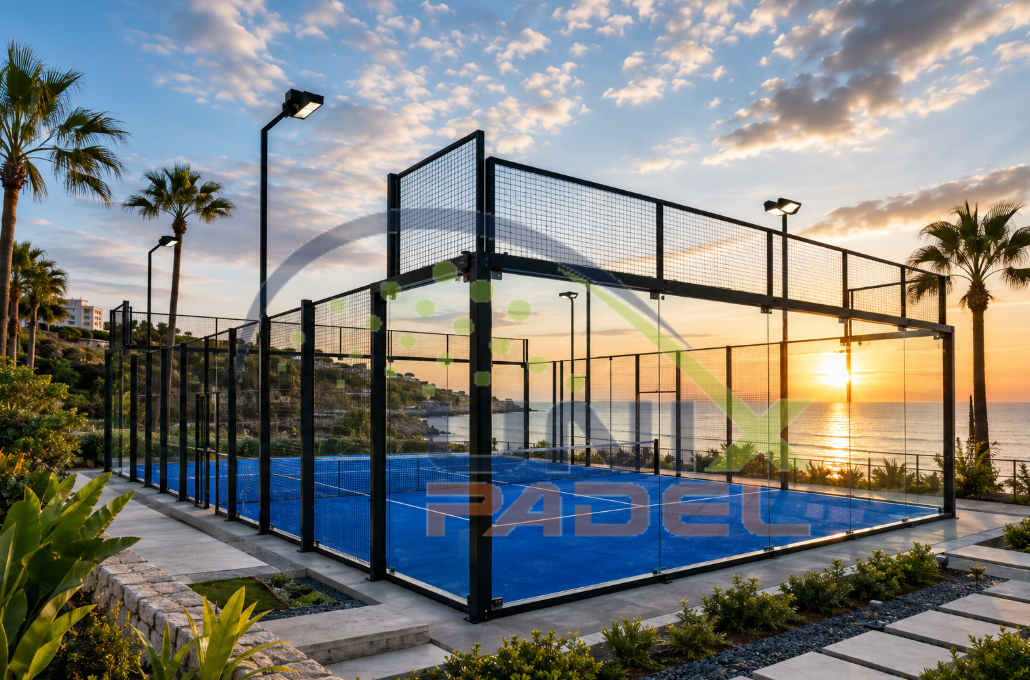
Professional coastal padel courts require specialized anti-corrosion protection.
Challenges Facing Coastal Padel Courts: Salt, Moisture & Wind
Manufacturers usually construct standard courts using basic painted steel. Consequently, microscopic salt particles and humidity compromise standard paint jobs within a few months in seaside zones. Therefore, structural rust quickly weakens basic frame structures. Additionally, humid area padel courts must withstand intense wind gusts that put immense strain on glass panels.
- Oxidation: Salt acts as a powerful catalyst for rust. As a result, exposed metal rapidly destroys non-treated coastal padel courts.
- Wind Loads: Standard court frames often fail during coastal storms because they lack reinforced pillars and heavy foundations.
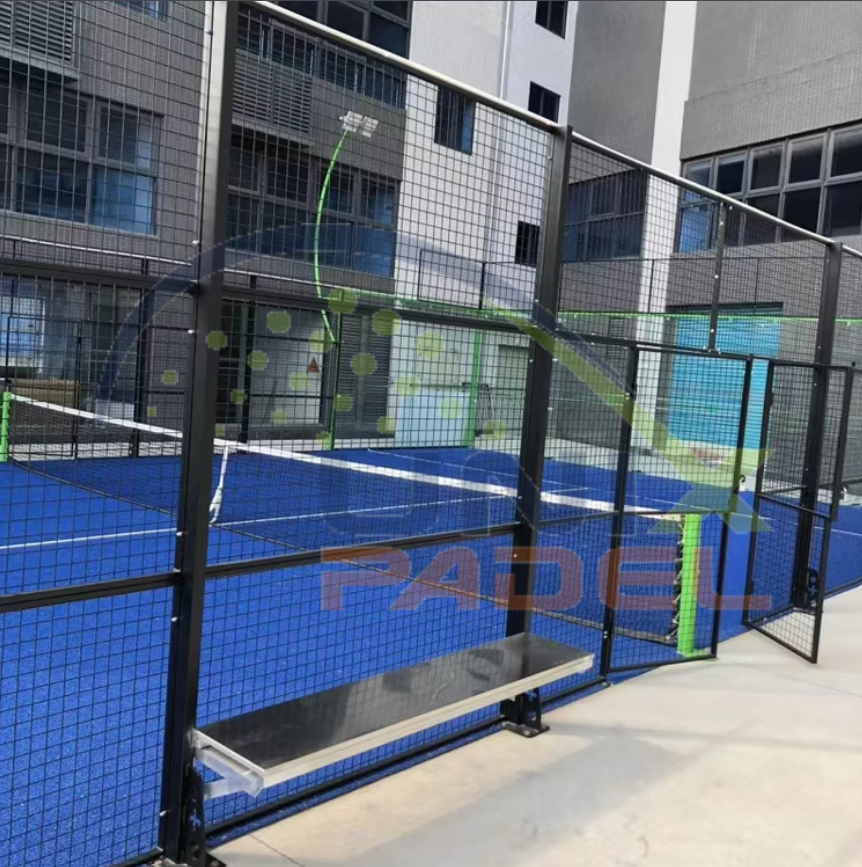
A marine grade padel court utilizes hot-dip galvanization to stop metal oxidation.
Engineering Solutions for a Marine Grade Padel Court
To combat aggressive seaside environments, engineers must upgrade every court component. For example, at Unixpadel, we follow strict manufacturing protocols that comply with ISO 12944 C5 marine standards for high-humidity installations:
- Hot-Dip Galvanized Steel or Aluminum: We submerge heavy-duty steel into molten zinc to form an impenetrable rust barrier for robust seaside padel courts.
- C5 Marine Paint System: Furthermore, we apply C5-M certified thermoplastic powder coating, which offshore oil rigs regularly use to prevent salt degradation.
- A4 Stainless Steel Hardware: In addition, our team uses A4 (316L) stainless steel bolts and nuts to stop rust streaks on all coastal padel courts.
| Component | Standard Court | Coastal Padel Courts |
|---|---|---|
| Frame Treatment | Pre-galvanized + Standard Paint | Hot-Dip Galvanized + C5 Marine Coating |
| Screws & Bolts | Zinc-plated (A2) | A4 (316L) Stainless Steel |
| Pillar Thickness | 2mm – 3mm | Reinforced 3mm+ for high wind loads |
| Glass Anchorage | Standard Neoprene | EPDM marine-grade rubber seals |
Summary: Building Long-Lasting Coastal Padel Courts
In conclusion, developers can successfully install coastal padel courts in humid and seaside environments. Although marine-grade structures require a slightly higher initial investment, they deliver massive long-term savings on maintenance. Therefore, selecting engineered anti-corrosion materials ensures your beachfront club remains profitable for years.
Planning a coastal padel project?
Please contact Unixpadel’s engineering team to discuss wind load calculations and marine-grade materials for your location.
