Short answer
Padel is a doubles racket sport played on an enclosed 20 x 10 m court with glass and mesh walls that stay in play. It is easy to learn, highly social and fits three courts on roughly the footprint of one tennis court, which is why clubs, hotels and municipalities are adding courts worldwide.
Padel is a racket sport that combines elements of tennis and squash: it is played in doubles, with an underhand serve, on a small court enclosed by glass and metal mesh walls that the ball can bounce off. It was created in Acapulco, Mexico, in 1969, and the International Padel Federation (FIP) has governed the international game since 1991.
For a facility owner, padel is less a new sport than a new kind of court: compact, fast to build and easy to fill, because people enjoy it from the first session.
How is padel played?
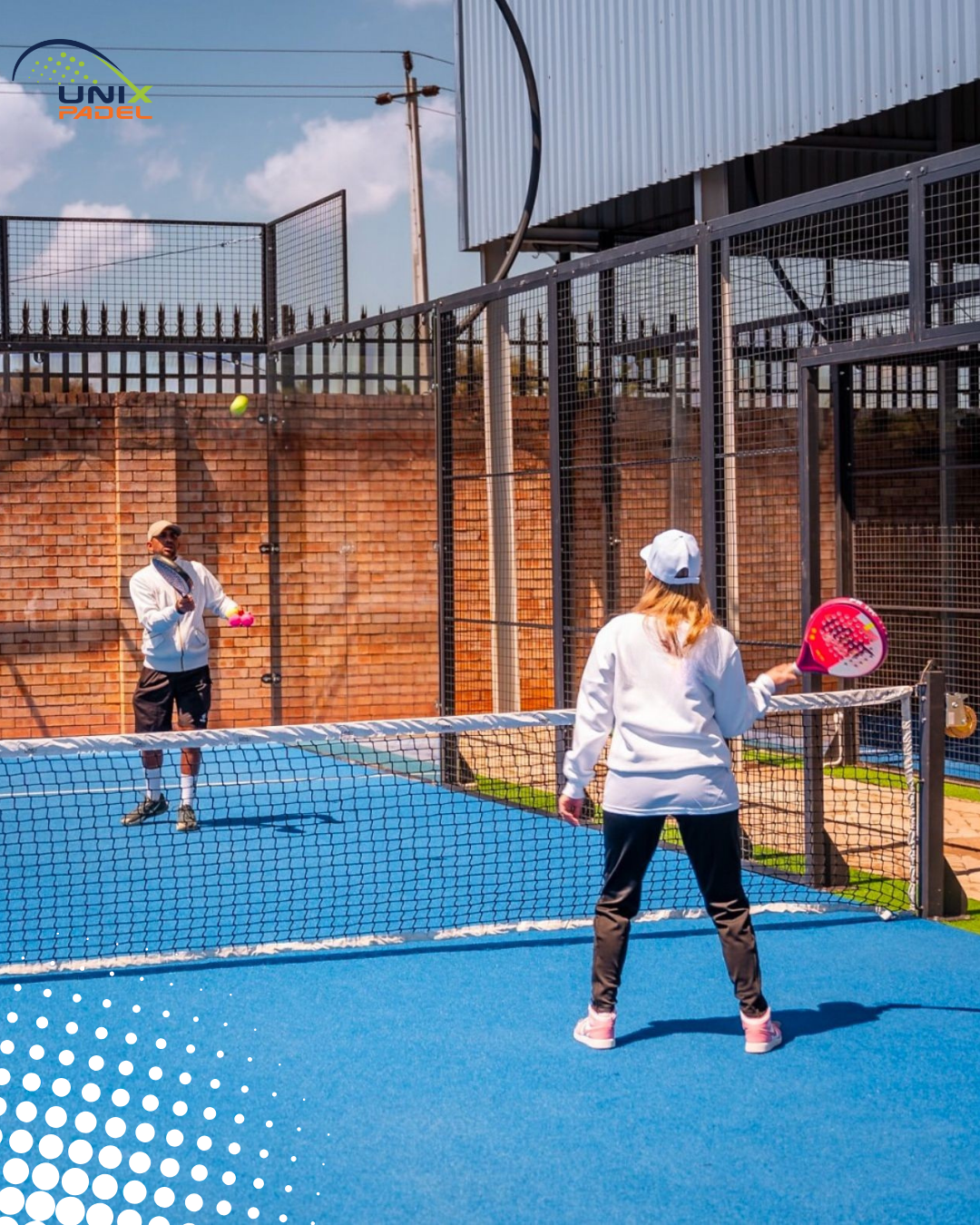
Four players share a court divided by a net. The essentials:
- Serve: underhand, with the ball struck at or below waist height after one bounce behind the service line, diagonally into the opponent’s service box.
- Walls in play: after the ball bounces on the opponent’s side it may hit the glass or mesh and stay in play. Players can also play the ball off their own walls.
- Scoring: the same as tennis (15, 30, 40, game), usually best of three sets with a tie-break at 6–6.
- Equipment: a solid, stringless perforated racket and a ball similar to a tennis ball with lower pressure.
Because the walls keep the ball alive, rallies are long and positioning matters more than power. That is why beginners, families and experienced tennis players can share the same court.
What does a padel court look like?
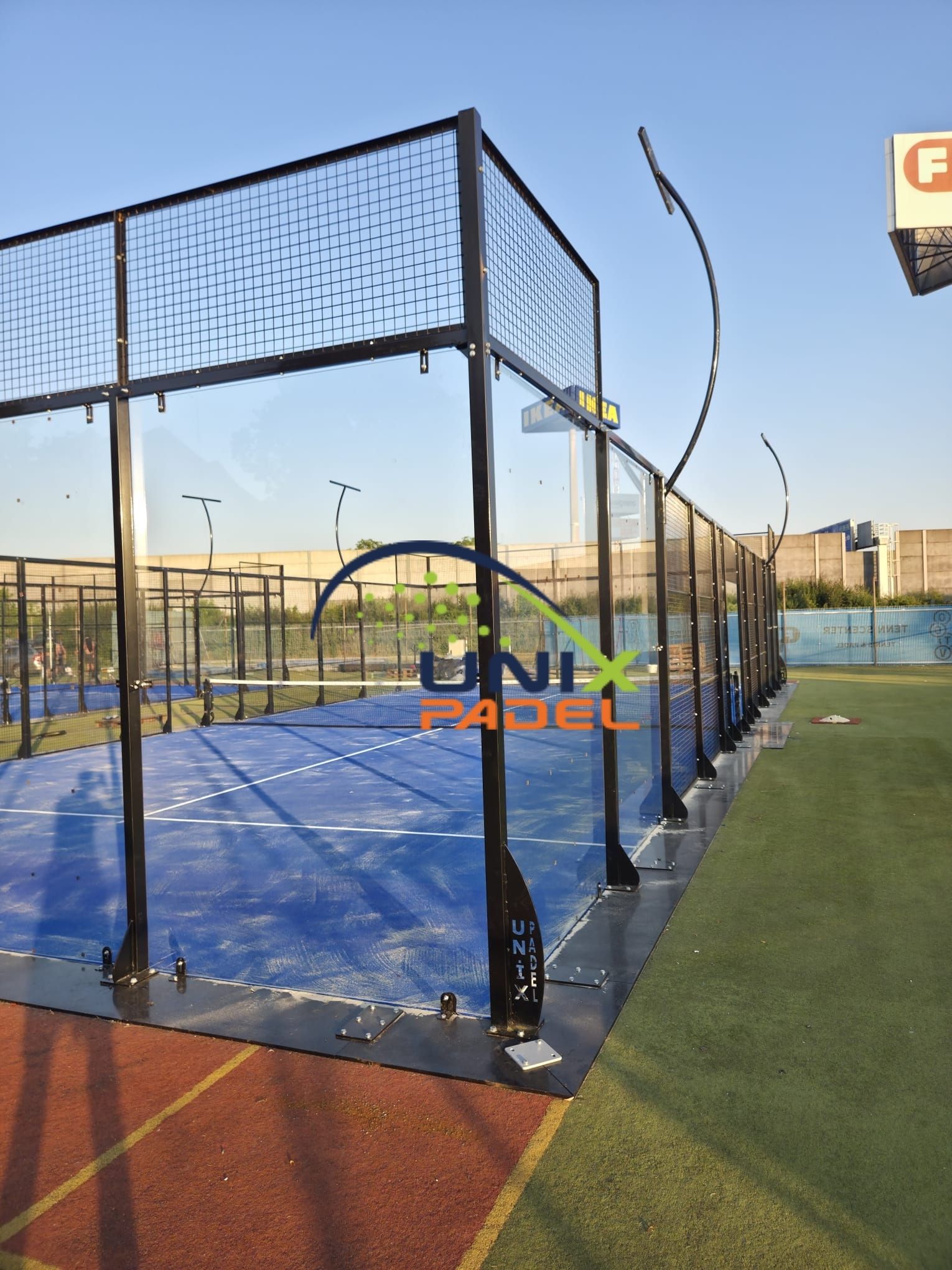
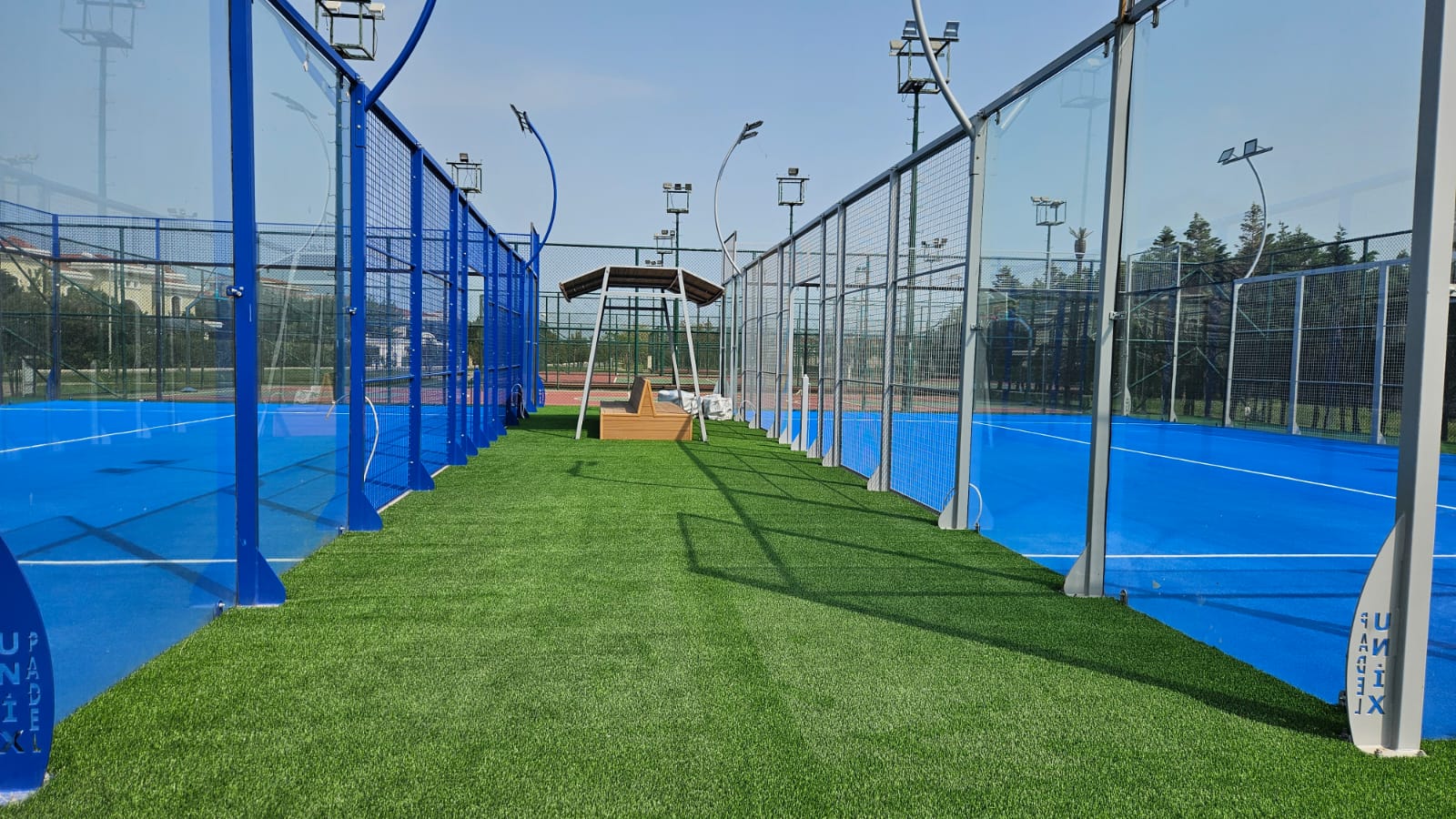
A regulation court is a rectangle of 20 m x 10 m, measured inside the walls. The back walls are 4 m high (3 m of glass topped by 1 m of mesh), the side walls combine glass panels at both ends with electro-welded mesh in the middle, and the floor is usually artificial turf filled with silica sand. The full set of FIP measurements, lines and tolerances is in our guide to padel court dimensions.
Indoors, the FIP sets a minimum clear height of 6 m over the whole court and suggests 8 m for new facilities; see ideal ceiling height for padel.
Why do clubs, hotels and cities invest in padel?
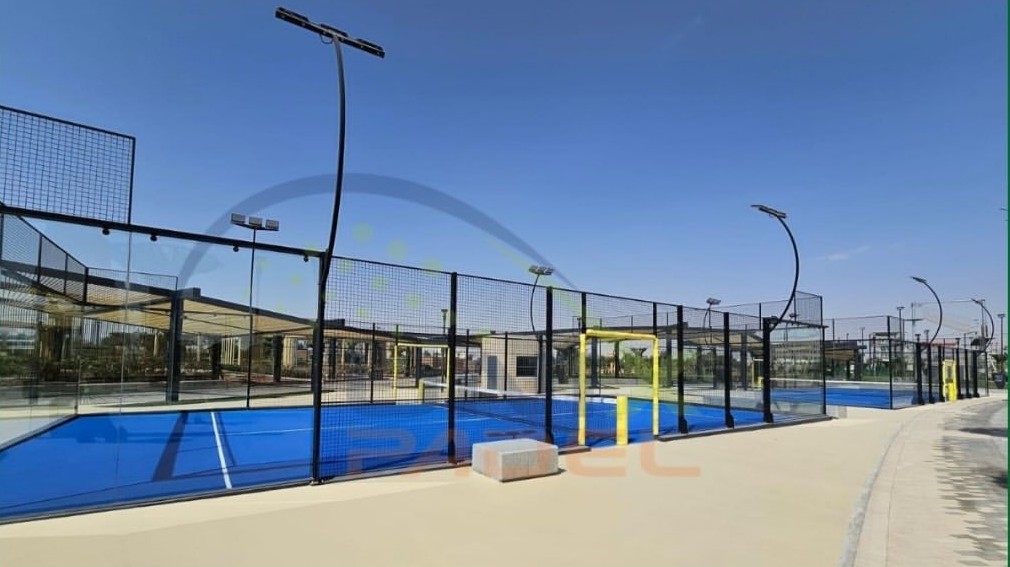
- Small footprint: roughly three padel courts fit on the space of one tennis court, so existing sites can add capacity without buying land.
- Four players per booking: every slot is shared by four people, which keeps the cost per player low and occupancy high.
- Short learning curve: new players enjoy real rallies in their first hour, so they come back and bring friends.
- Social and spectator friendly: glass walls let people watch from outside the court, which suits hotels, resorts, shopping centres and clubhouses.
- Fast to build: a prefabricated steel court installs in days on a prepared base.
The budget side, from the court package to delivery and installation, is covered in how much a padel court costs.
Which padel court types are there?
| Court type | Glass and structure | Typical use |
|---|---|---|
| Standard court | 10 mm tempered glass, extra pillars for stability | Clubs, schools, municipalities, windy sites |
| Panoramic court | 12 mm glass, slimmer frame for open views | Premium clubs, hotels, events |
| Full panoramic court | Frameless glass look on the playing walls | Showcase and tournament courts |
| Single court | 20 x 6 m playing area | Training, coaching, small plots |
| WP Challenge court | Three-pillar corners, extra bracing | High wind areas |
| Flat Floor court | Sits on a flat surface without a concrete slab | Rooftops, car parks, temporary sites |
All Unixpadel courts are designed, welded, galvanized and powder coated in our own factory in Adıyaman, Türkiye, and have been installed in more than 94 countries.
What should you plan first?
Start with the site: available area, ground conditions, indoor or outdoor, and local climate. Then choose the court model and the surface, and decide whether a canopy is needed. The 5 key factors of padel court design walk through these decisions in the order an engineer would take them.
If you already have a site in mind, send us your plot dimensions and location and our engineers will suggest a court layout.