Short answer
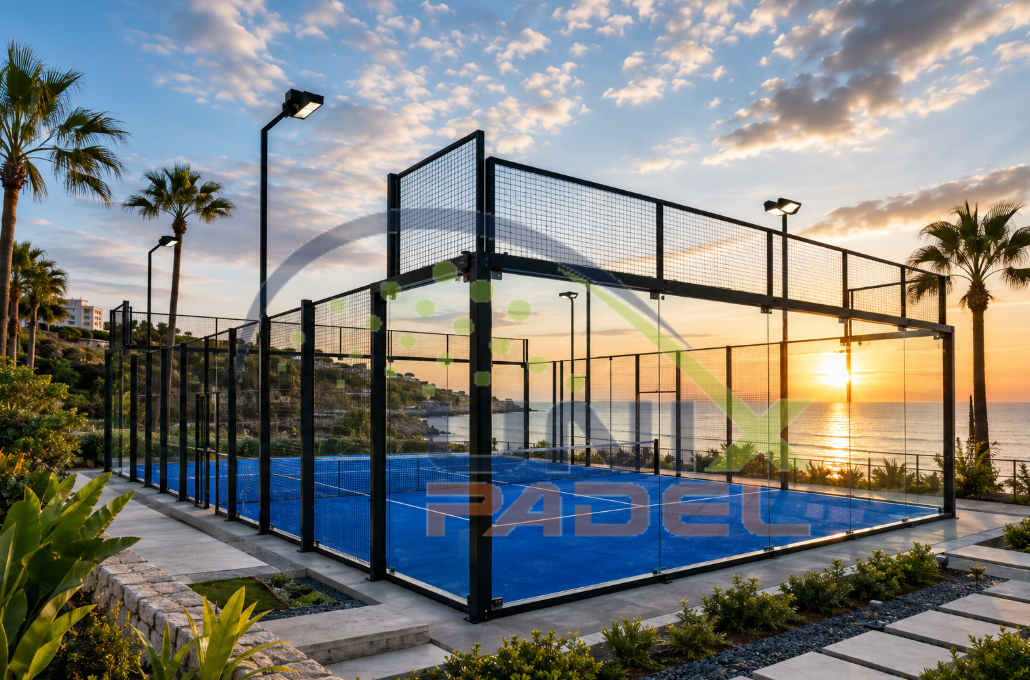
Most professional padel courts use S355 structural steel that is hot-dip galvanized to ISO 1461 and then powder coated. This duplex system combines high strength with long corrosion protection. Stainless steel is reserved for fasteners and special projects, because it costs far more for the same stiffness.
The steel frame carries the glass, resists the wind and takes thousands of impacts from balls and players every week. Two choices decide how long it lasts: the grade of steel, which sets its strength, and the corrosion protection, which sets how it ages. Here is what to ask for.
Which steel grade should a padel court use?
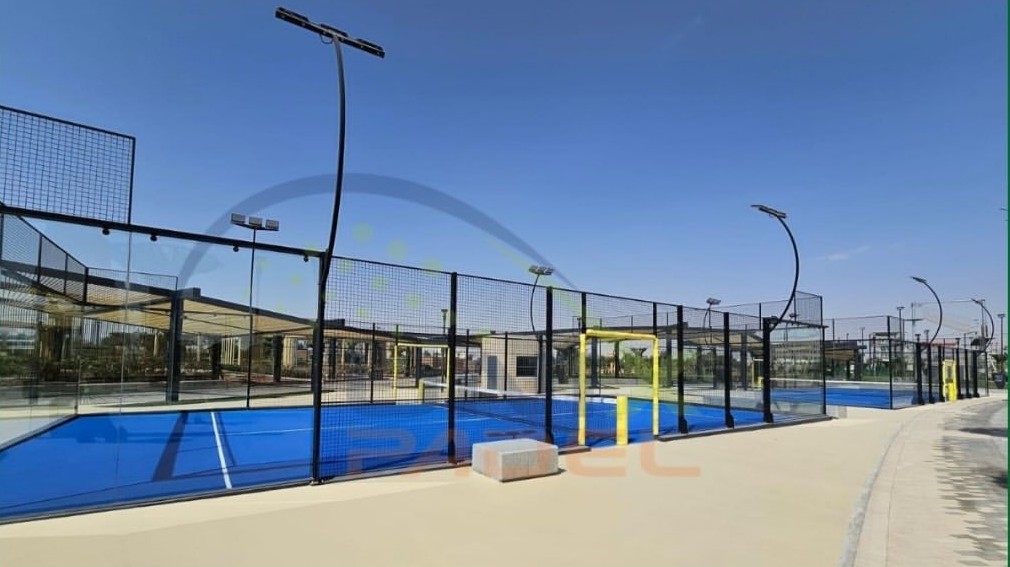
The industry standard is S355 structural steel to EN 10025: a grade with a minimum yield strength of 355 MPa, which allows a stiff frame with moderate wall thicknesses. Unixpadel builds its frames from rectangular hollow sections, for example 100 x 50 x 2 mm columns and 100 x 50 x 3 mm beams on the Standard court and 100 x 50 x 3 mm columns on the Panoramic court.
Stiffness matters as much as strength: a frame that flexes in the wind makes glass vibrate, loosens fixings and changes the rebound off the walls.
How should the steel be protected against corrosion?
| Protection system | How it works | Typical use |
|---|---|---|
| Paint only | Paint film on bare steel | Not recommended for outdoor courts |
| Pre-galvanized tube + paint | Thin zinc layer applied before cutting and welding, so cut ends and welds are exposed | Low-cost indoor structures |
| Hot-dip galvanizing (ISO 1461) + powder coating | Finished parts dipped in molten zinc, then powder coated: the “duplex” system | Outdoor and indoor courts; Unixpadel standard |
| Duplex system with heavier coating for high corrosivity | Thicker zinc and coating build specified for the site’s corrosivity category | Coastal, humid or industrial sites |
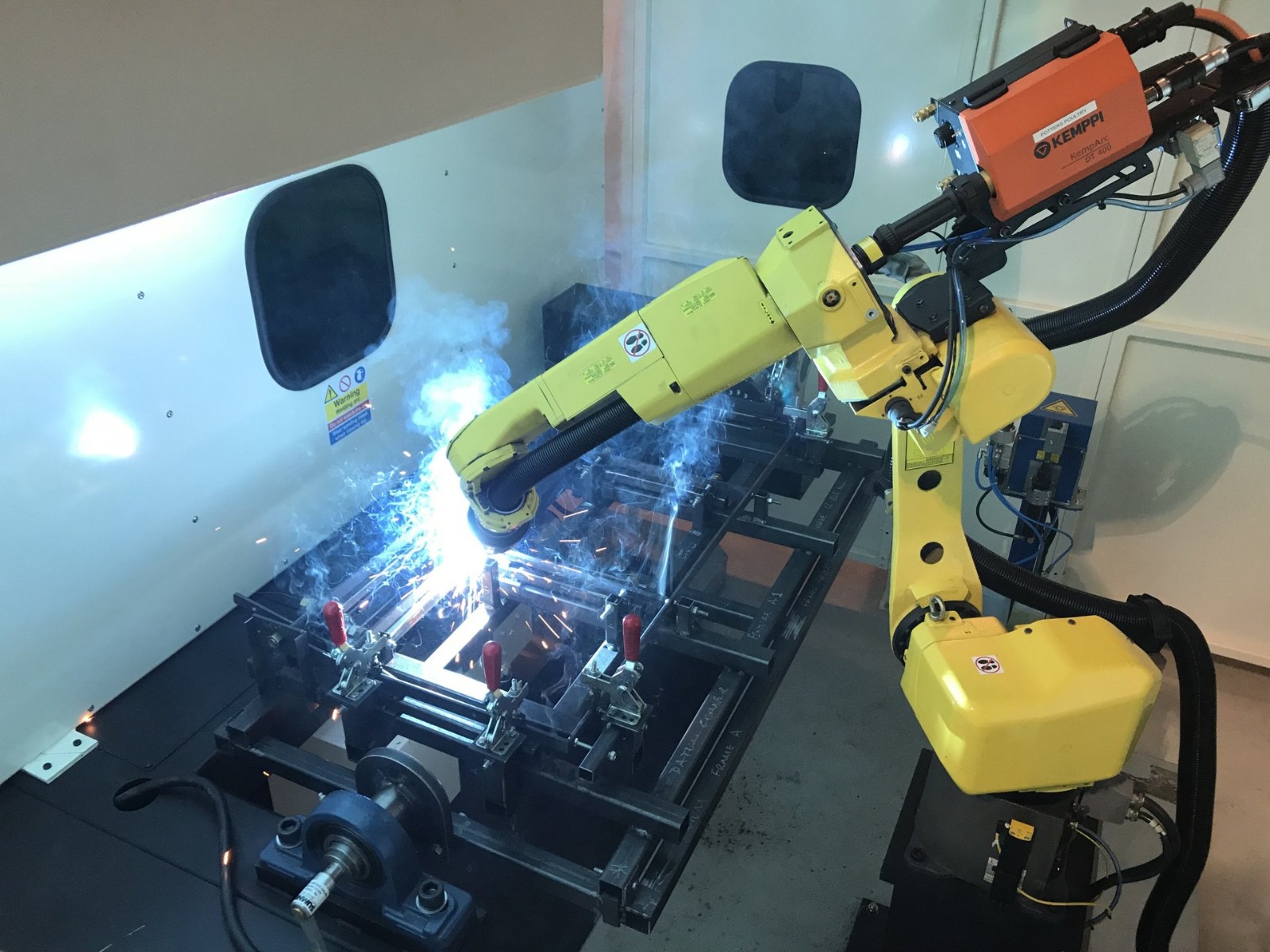
Hot-dip galvanizing after fabrication is the key step: every surface, inside and out, including welds and cut edges, is coated with zinc that protects the steel even where the powder coat is later scratched. The powder coat adds colour, UV resistance and a second barrier.
When does stainless steel make sense?
Stainless steel resists corrosion without a coating, but for a full court frame it is rarely the best value:
- It costs several times more than galvanized S355.
- Common austenitic grades have a lower yield strength than S355, so profiles must be heavier for the same stiffness.
Where stainless steel does pay off is in fasteners: A4 (316) stainless bolts and nuts avoid rust streaks around fixings, especially near the sea. Stainless frames are kept for special architectural projects.
How do you choose protection for your site?
Match the coating to the corrosivity of the location. ISO 9223 classifies atmospheres from C1 (very low, heated interiors) to C5 (very high, coastal and industrial) and CX (extreme, offshore); ISO 12944 then defines protective coating systems and their expected durability for each category.
- Indoor or dry inland sites (C1–C3): hot-dip galvanizing plus powder coating.
- Coastal, humid or industrial sites (C4–C5): a heavier duplex system and A4 stainless fasteners, as explained in coastal padel courts.
Which standards should you ask your supplier for?
| Standard | What it covers |
|---|---|
| EN 10025 | Structural steel grades such as S355 |
| ISO 1461 | Hot-dip galvanized coatings on fabricated steel |
| EN 1090 | Execution and CE marking of steel structures |
| ISO 9223 / ISO 12944 | Corrosivity categories and protective coating systems |
| EN 12150-1 | Tempered safety glass used in the walls |
| ISO 9001 | Quality management of the manufacturing process |
Unixpadel courts are also supplied with static analysis approved by Istanbul Technical University (ITU) for the wind conditions of the project.
Next steps
The steel frame works together with the mesh and glass; see the net and mesh guide and the structural factors in padel court design. For a site-specific recommendation, ask our engineers.