
Padel Court Surface Comparison: Artificial Grass vs Concrete
How to Build a Padel Court? A Beginner’s Guide
July 21, 2026What Is Padel? Everything Beginners Need to Know
July 21, 2026When building or playing, the padel court surface you choose directly impacts gameplay quality. Indeed, the two most common options are artificial grass and concrete. Each option offers distinct characteristics regarding ball bounce, player safety, and maintenance requirements. Consequently, this guide presents a clear overview according to official standards set by the International Padel Federation (FIP) to help you weigh the options.
Artificial Grass Padel Court Flooring
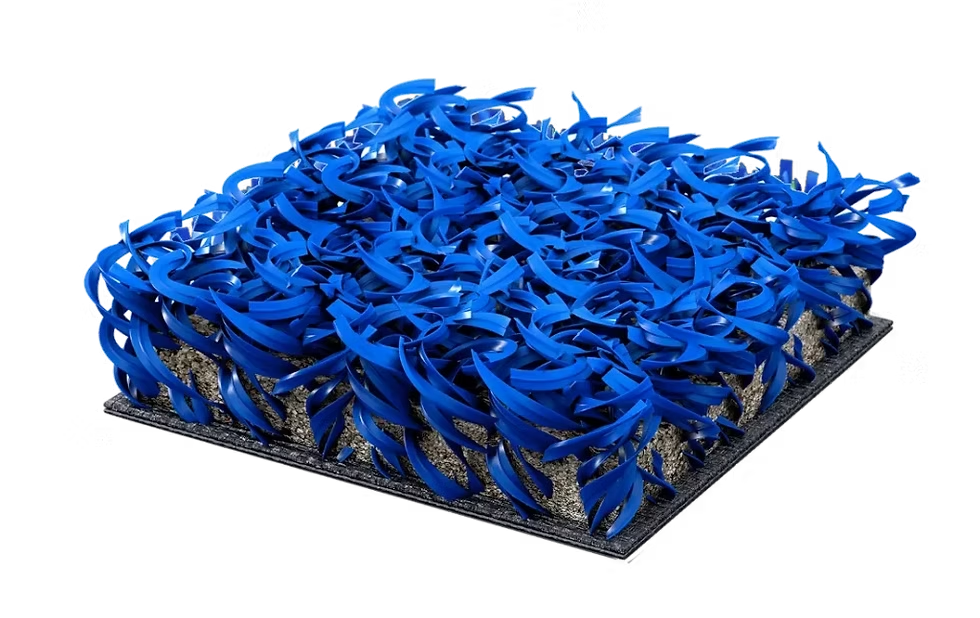
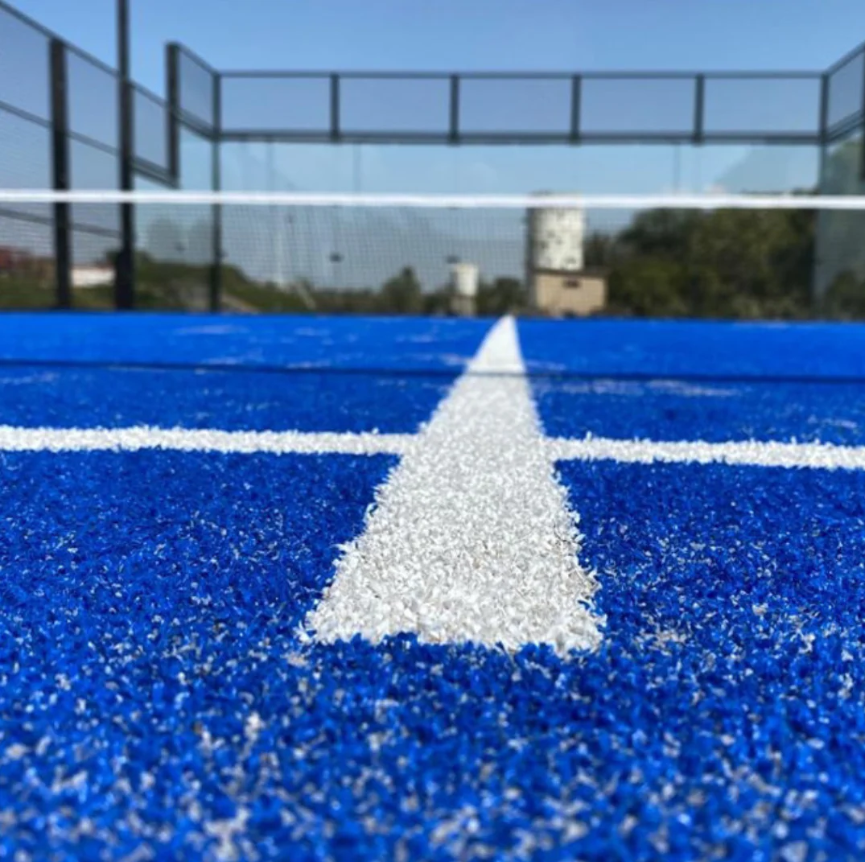
Artificial grass serves as the official and most popular choice worldwide. Specifically, manufacturers combine this turf with fine silica sand to deliver optimal grip while allowing smooth sliding for wide shots. You can check out high-performance turf options on our Unixpadel court models page.
Advantages of Turf
- Joint Protection: First, the cushioned turf absorbs impact effectively, which protects knees, ankles, and lower backs.
- Natural Sliding: Furthermore, the distributed sand enables controlled slides, preventing sudden stops and reducing joint stress.
- Better Gameplay: Consequently, it delivers a predictable, moderate bounce speed that encourages longer and more tactical rallies.
Disadvantages & Maintenance
However, maintaining artificial turf demands regular attention. Maintenance teams must brush the fibers routinely to distribute sand evenly. If sand accumulates unevenly, players encounter inconsistent traction. In addition, outdoor installations require proper drainage systems to prevent moss growth during rainier seasons.
Concrete vs Porous Concrete Base
In contrast, builders generally choose concrete for public parks, budget-conscious developments, or multi-sport facilities. Porous concrete mixtures allow water to drain directly through the slab during heavy rainfall.
Advantages of Concrete
- Extreme Durability: First, a hard concrete base withstands harsh weather conditions, intense UV exposure, and continuous public usage without structural degradation.
- Low Maintenance: Additionally, concrete requires minimal routine upkeep because facility managers do not need to brush or replenish sand.
- Fast Game: Finally, the rigid base creates a faster, higher ball bounce compared to artificial turf.
Disadvantages & Comfort
Unfortunately, concrete exerts higher impact forces on the human body. Frequent play on hard surfaces increases joint fatigue and injury risks. Moreover, the abrasive texture accelerates wear on padel balls and footwear. Official tournament sanctioning bodies also prohibit pure concrete for competitive events.
Which Padel Turf vs Concrete Option is Right for You?
For Clubs & Professionals
If you operate a commercial club or aim to host official matches, choosing an Artificial Grass setup remains essential. It protects player health while delivering standard tournament performance.
For Public Parks
Alternatively, if you plan an unmonitored public park installation without dedicated maintenance staff, a Concrete option offers superior long-term resistance to wear and vandalism.
Cost Efficiency
Concrete requires lower ongoing maintenance expenditure over time. Therefore, while artificial turf involves higher initial costs, it attracts significantly more players, maximizing commercial returns.
